
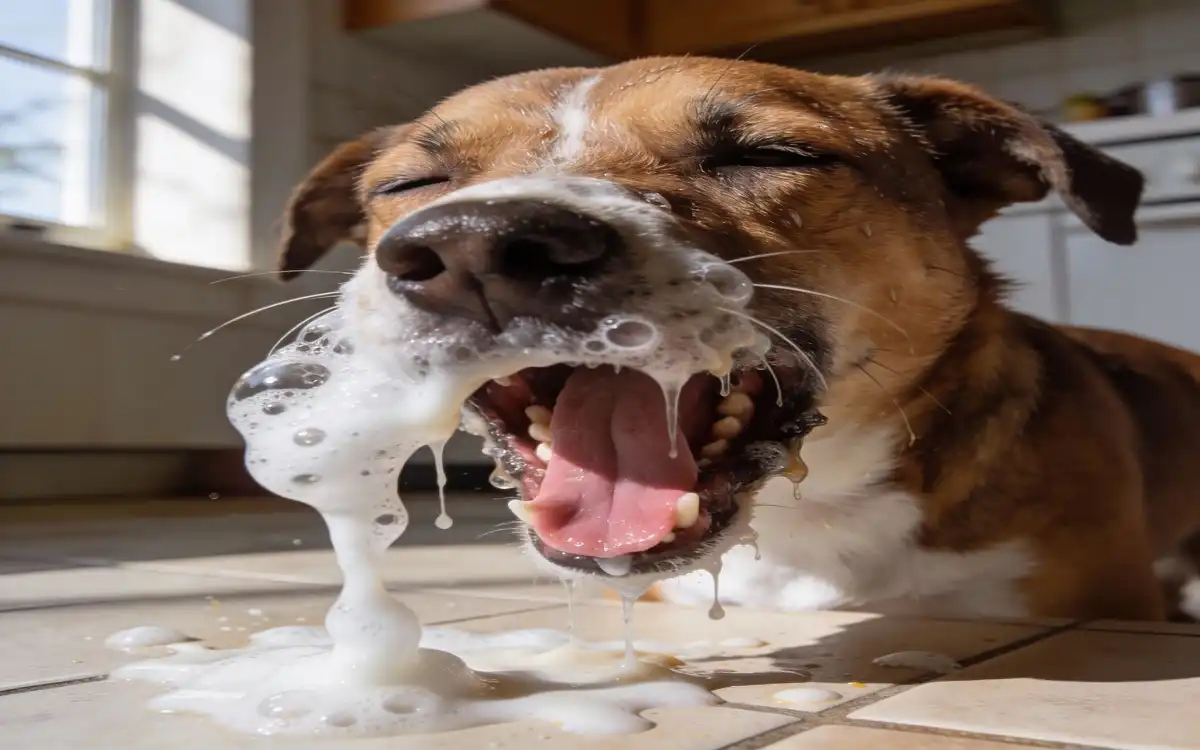
Seeing your dog throwing up white foam can scare any pet owner. This guide from TalentDogs explains why it happens, what to do, and how to keep your talented pup healthy in 2026.
Common Causes
Dogs often vomit white foam when their stomach is empty, leading to excess acid and saliva mixing into foam. Acid reflux sends stomach acid back up, irritating the throat and causing foam vomit. Other reasons include eating something bad, like spoiled food or trash, which upsets the gut.
Gastroenteritis from infections or allergies inflames the stomach and intestines. Pancreatitis, or pancreas swelling, often from fatty foods, leads to foam along with belly pain. Blockages from swallowed toys block the gut, making foam the only thing that comes up.
Serious Warning Signs
Not all foam vomit needs a rush to the vet, but watch for red flags. If your dog throwing up white foam more than twice in 24 hours, or shows lethargy, it could signal a big problem. Loss of appetite, diarrhea, or a bloated belly point to emergencies like bloat or parvovirus.
Blood in the vomit, weakness, or pain when touched means go to the vet now. In 2026, vets stress quick action since new tools like fast diagnostics help catch issues early. Respiratory problems like kennel cough can mimic foam vomit with gagging.

Home Care Steps
First, stop food for 12-24 hours to rest the stomach, but give small water sips. If no more vomiting, offer bland food like boiled chicken and rice in tiny amounts. Watch closely; if symptoms return, call the vet.
Keep your dog calm and away from toxins. For TalentDogs pups in training, skip sessions until recovered to avoid stress. Track symptoms in a note app for the vet.
When to See a Vet
Rush to the vet if vomiting lasts over a day, or with dehydration signs like dry gums. Puppies, seniors, or dogs with health issues need care faster. Expect exams, blood tests, or X-rays to find the cause.
In 2026, pet trends include quick tele-vet apps for advice, but hands-on checks rule for foam cases. No major new vomiting guidelines this year, but focus on prevention stays key.
Treatment Options
Vets may give fluids for dehydration, anti-nausea drugs, or antibiotics for infections. For blockages, surgery fixes it. Chronic issues like kidney disease need diet changes and meds.

| Cause | Symptoms Besides Foam | Vet Action Needed | Prevention Tip |
| Acid Reflux | Frequent small vomits | Antacids, diet change | Smaller, frequent meals |
| Gastroenteritis | Diarrhea, lethargy | Fluids, antibiotics | Avoid table scraps |
| Pancreatitis | Belly pain, no appetite | Hospital stay, low-fat diet | Skip fatty treats |
| Blockage | Retching, no poop | X-ray, possible surgery | Toy supervision |
| Kennel Cough | Coughing, gagging | Rest, cough meds | Vaccinations up to date |
| Bloat (GDV) | Swollen belly, collapse | Emergency surgery | Feed from ground level |
This table helps spot issues fast.
Prevention for Healthy Pups
Feed regular meals to avoid empty stomachs; try puzzle feeders for slow eating. Use quality food matching your dog’s needs, like for active TalentDogs trainees. Keep vaccines current against parvo and cough.
Secure trash and toxins; walk leashed to stop scavenging. Yearly vet checks catch problems early. In 2026, new pet foods with probiotics aid gut health.
TalentDogs Tips for Active Dogs
TalentDogs celebrates gifted dogs in shows and training. For these pups, foam vomit can come from stress or travel, so pack bland snacks. Train with hydration breaks; spot foam early to keep performances on track.
Build a routine: consistent food, play, and rest. Owners share how TalentDogs programs boost health awareness.
Long-Term Health Care
Monitor weight and stool for gut clues. Switch foods slowly over a week. Probiotics from vets support digestion. For breeds prone to issues, like deep-chested ones for bloat, dog throwing up white foam, follow breed tips.

TalentDogs stresses balanced lives for shining stars.
No big 2026 updates changed core advice; focus remains on observation and vet care. Act fast, prevent issues, and your dog stays happy. Consult a vet for your pup’s needs—this guide informs but doesn’t replace pro advice.
For More Details Visit Talent Dogs
Leave a Reply