

Dogs have been beloved companions to humans for thousands of years, often praised for their loyalty, intelligence, and sensitivity. One of the most intriguing questions many pet owners ask is: Can dogs sense ghosts? This question touches on a mysterious blend of the supernatural, animal behavior, and cutting-edge science. While there is no definitive scientific proof that dogs can perceive ghosts, their remarkable senses and curious behaviors continue to spark wonder and debate.

The Talent Dogs shares 7 incredible revelations about dogs and their potential to sense things beyond human perception. Whether you are a firm believer in the paranormal or a science enthusiast, these insights will amaze you and deepen your appreciation for our canine friends.
Dogs’ Extraordinary Senses: Beyond Human Limits
Dogs experience the world differently than humans, primarily because their senses are fine-tuned in ways we can barely imagine. Their sniffers are legendary; a dog’s nose contains about 220 million scent receptors—compared to only about 5 million in humans. This massive difference allows dogs to detect faint smells that are completely hidden from us. Dogs can even detect human stress through scent changes or identify diseases like cancer with incredible accuracy.
Their hearing is equally impressive. Dogs can pick up sounds at frequencies as high as 65,000 Hertz, far beyond the human range of about 20,000 Hertz. They also detect much quieter sounds, able to hear noises at -15 decibels that would be impossible for humans to perceive. Their vision is different too; while dogs don’t see as many colors as humans do (they are red-green colorblind), they excel at spotting movement and have night vision about five times better than humans.

Given these supernatural-level senses, dogs might respond to stimuli we are completely unaware of. This is often a key reason behind dogs’ behaviors that seem to indicate sensing something unseen, leading to the question: can dogs sense ghosts?
The Paranormal Perspective: Dogs as Psychic Beings?
Some paranormal investigators and enthusiasts believe dogs possess a kind of extrasensory perception (ESP)—mental abilities beyond the five traditional senses. This includes telepathy, clairvoyance, and precognition, which could allow dogs to sense spirits or energies invisible to humans.
Parapsychologists suggest that ghosts are not physical entities that can be detected by normal senses. Instead, a non-sensory perception might be needed. Dogs—and many other animals—are thought by some to be inherently psychic, capable of perceiving these spirits intuitively. One famous story tells of a dog barking persistently at stairs in a home where its owner’s recently deceased father was believed to be present as a spirit. The dog’s behavior was interpreted as evidence of sensing the ghost.

However, this view remains controversial and lacks strong scientific evidence. Skeptics argue that ESP and supernatural claims are difficult to prove experimentally and often rely on anecdotal reports.
Sensory Explanations for “Ghostly” Dog Behavior
Most scientists and animal behavior experts suggest more down-to-earth explanations. Dogs’ sharp senses allow them to notice very subtle environmental cues beyond human detection. For example, dogs may hear the tiny movements of insects within walls, faint sounds from faraway sources, or smell invisible scents carried in the air.

Dogs’ reactions to these stimuli might be mistaken for ghostly encounters. A sudden bark or strong stare at an empty corner could be a response to a tiny rustle, an unusual odor, or flickering light patterns imperceptible to humans. Moreover, dogs are very sensitive to changes in human emotions and body language, so they might react to their owner’s nervousness if the owner believes something supernatural is happening nearby.
Therefore, a scientific approach suggests that what looks like ghost sensing is often a display of dogs’ natural abilities to detect real but subtle environmental changes.
Dogs and the Emotional Connection to Ghosts
Even if dogs don’t literally see ghosts, their ability to sense emotions and energy is extraordinary. Dogs can detect changes in human mood and stress levels through chemical signals and behavior cues. This makes them intuitive companions, especially in times of grief or fear.

Some pet owners believe their dogs sense the presence of deceased loved ones. While this may have no measurable paranormal explanation, it underscores the deep bond between dogs and humans. Dogs often react to moments when their owners are emotionally vulnerable, comforting or alerting them in ways that seem almost supernatural.
This emotional resonance often leads pet owners to a comforting belief: that their dogs can sense ghosts, offering watchful protection or companionship even beyond the physical realm.
Cultural and Historical Beliefs About Dogs and Spirits
Throughout history and across cultures, dogs have been linked to the spiritual world and regarded as guardians or guides between the living and the dead. The ancient Egyptians worshipped Anubis, a dog-headed god of the afterlife. In various folklore traditions worldwide, dogs are thought to possess an otherworldly awareness, capable of seeing spirits or bad omens.

These beliefs persist today, often bolstered by stories of dogs reacting strangely in haunted houses or at paranormal hotspots. Whether these tales are fact or fiction, they contribute to the popular narrative that dogs may have a sixth sense for ghosts.
Such cultural context helps explain why so many people readily interpret their dogs’ mysterious behaviors as evidence of ghostly presence.
Science’s Current Stance on Dogs Sensing Ghosts
Despite numerous reports and anecdotal stories, science has not confirmed that dogs can actually sense ghosts. Contemporary animal cognition experts emphasize that dogs’ behaviors are usually explainable by their extraordinary biological senses rather than paranormal phenomena.

Studies show dogs react to environmental cues—sounds, smells, motions—that humans cannot detect. Dogs’ reactions often have a perfectly reasonable stimulus even if the human observer is unaware of it. While the possibility of unknown abilities can’t be completely ruled out, the mainstream scientific view remains that there is no proof supporting dogs’ supernatural perception.
Researchers continue to study dog behavior and communication, but currently, no validated scientific evidence affirms that dogs can sense ghosts.
Seven Revelations About Dogs and Ghost Sensing
To summarize, here are seven key revelations about dogs and the question: can dogs sense ghosts? This table encapsulates the main points:

| Revelation | Insight |
| 1. Superior senses | Dogs’ nose, ears, and night vision far exceed human senses, detecting things unseen or unheard. |
| 2. No scientific proof | There is no confirmed scientific evidence that dogs perceive ghosts or spirits. |
| 3. Paranormal belief | Some parapsychologists and paranormal enthusiasts claim dogs have extrasensory perception. |
| 4. Sensory stimuli explanations | Dogs often respond to faint noises, movements, or smells that humans miss. |
| 5. Emotional sensitivity | Dogs can detect human emotions and stress, influencing their behavior around owners. |
| 6. Cultural symbolism | Dogs have historically been linked to spiritual realms in many cultures and mythologies. |
| 7. Ongoing research | Science continues exploring canine cognition, but has yet to verify any ghost-sensing ability. |
This table highlights that dogs likely react to real sensory information, emotional cues, or cultural interpretations rather than actual ghostly presences.
Finally
So, can dogs sense ghosts? The honest answer is that we don’t know for sure. While dogs might seem to react to invisible stimuli, these are most likely sounds, scents, or movements beyond human perception rather than spirits. Paranormal beliefs about dogs’ extrasensory perception still lack solid scientific backing.
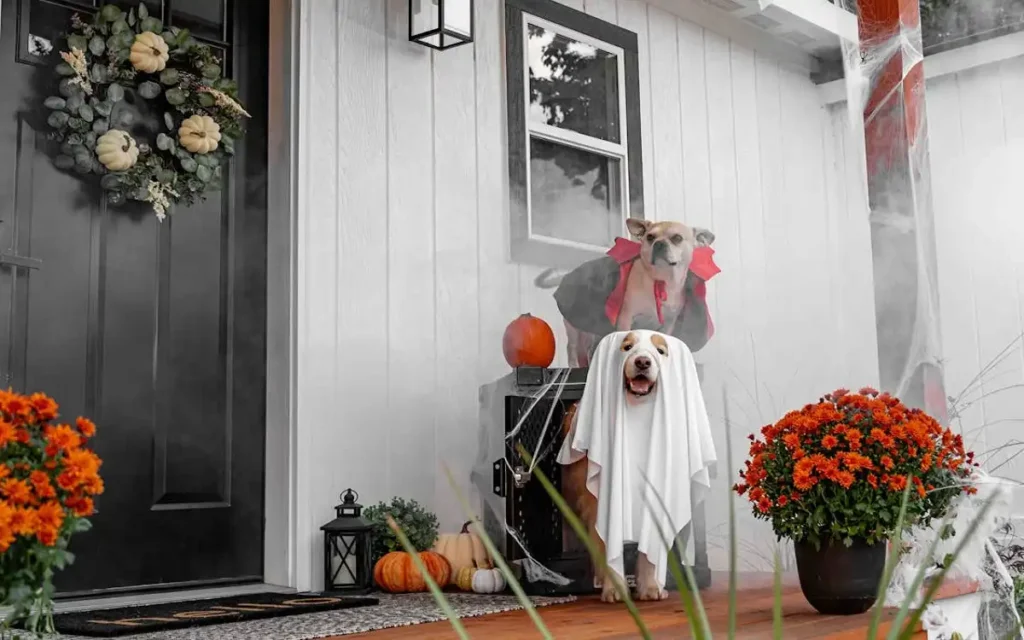
Yet dogs remain one of our most perceptive companions, tuned intricately to the world’s subtle signals. Their mysterious behaviors keep the question alive and spark imagination and stories that deepen our connection with them. Whether rooted in science or mystery, dogs’ sensitive nature is a true wonder of the animal world.
Pet owners can cherish their dogs’ uncanny ability to sense changes in their environment and emotions—perhaps sometimes even sensing what we cannot explain. This blend of science and mystery continues to amaze and inspire those who share their lives with these remarkable animals.
For More Details Visit Talent Dogs
Leave a Reply